

Magical psychosis
Thoughts on finding magic and losing your mind.

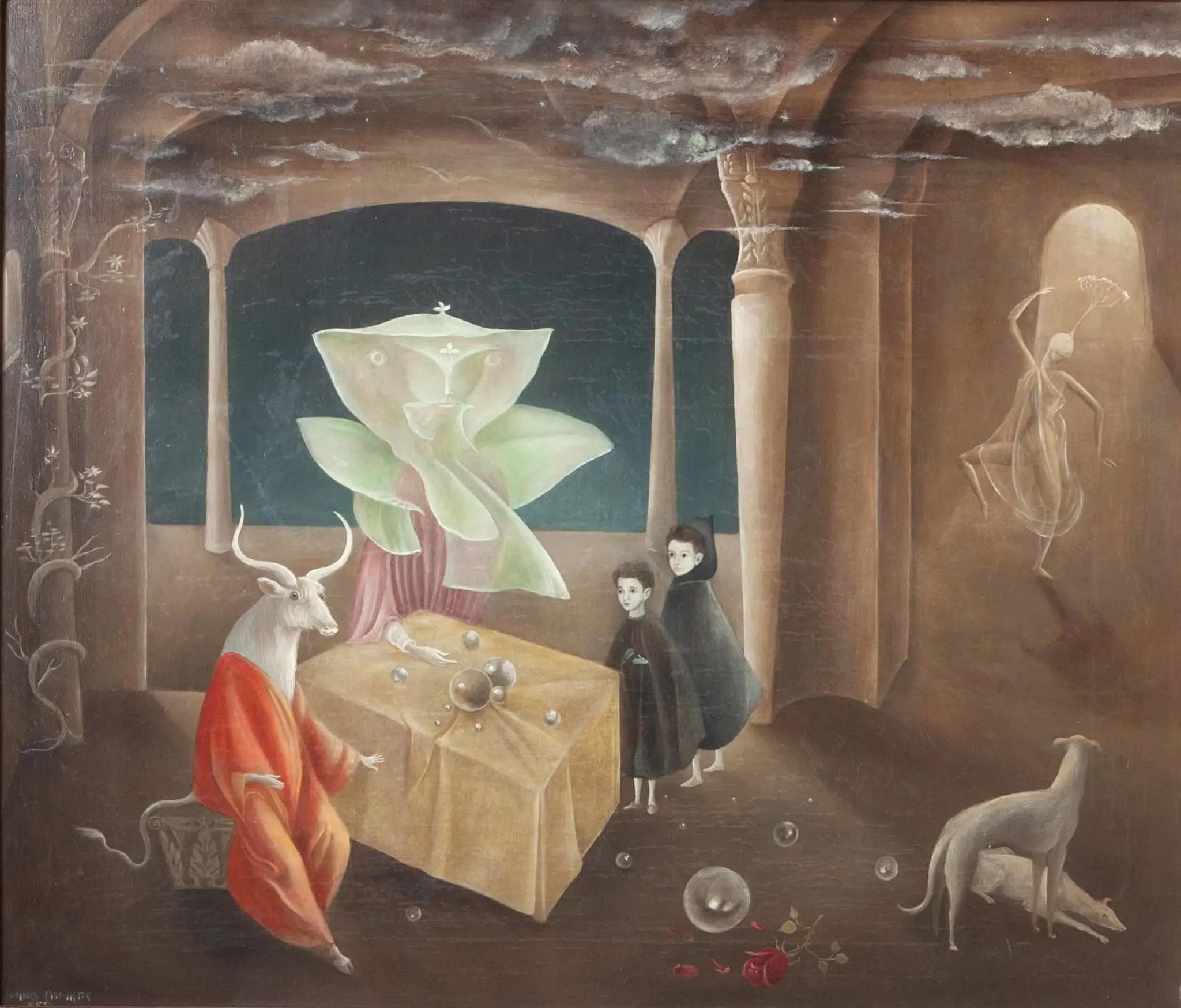
Leonora Carrington’s “And Then We Saw the Daughter of the Minotaur”. Estate of Leonora Carrington/Artists Rights Society (ARS), New York
No one is buying memoirs from actual writers. Even celebrities aren’t shifting copies from Bezos’ virtual shelves the way they used to. There has to be a ridiculously sensationalist story attached to the star, a slime trail to events twisted and grubby. Like, I dunno, the public thinking your mum was murdered by the queen, or being trapped in a conservatorship for years, or whatever happens in a book with a title like “I’m Glad My Mom Died”.
But then there’s The Make-Believe, which I found both extraordinary and surprisingly mundane. It’s the new memoir by Skins and Game of Thrones actor Hannah Murray about getting sucked into what could probably be considered a cult-lite. Or at least a fake magic organisation whose silly nonsense exacerbated and ultimately exposed her preexisting bipolar disorder.
This memoir touches on many of my “interests”: energy; invisible forces; acting; women losing touch with reality; women being horny, Chaotic Neutral characters out in the world. I found it to be a relatable account of a specific scenario. Maybe it is not relatable to many, but IYKYK: when you start to feel that what might be called “magic” is real, it can seriously lubricate an inevitable skid into madness in your own mind. The author is also called Hannah.
Here is everything I thought about magic, psychosis and woo culture while reading it:
There is something sad to me about the fact that Hannah Murray got sucked into this cult (I’ll just call it a cult from here on out because she does) after discovering energy healing / reiki, which is real. Her discovery of ~energy being something transferable and experiential made her believe in magic because she could feel it happening. It could’ve stopped there – a wonderful, innocent discovery – but it didn’t. Now she doesn’t even get to enjoy reiki. Or let herself believe in it.
Obviously there is a middle-aged married man at the top of this cult high off his own supply. Hannah calls him “Steve”. Having spent years studying spirituality culture, I don’t trust a single man who works in the woo industry. There are probably innocent guys but there are consistently so many weird ones that you may as well gravitate instead towards a deluded Paltrow-esque MLM girlboss on sabbatical in Bali. Ideally neither, obviously.
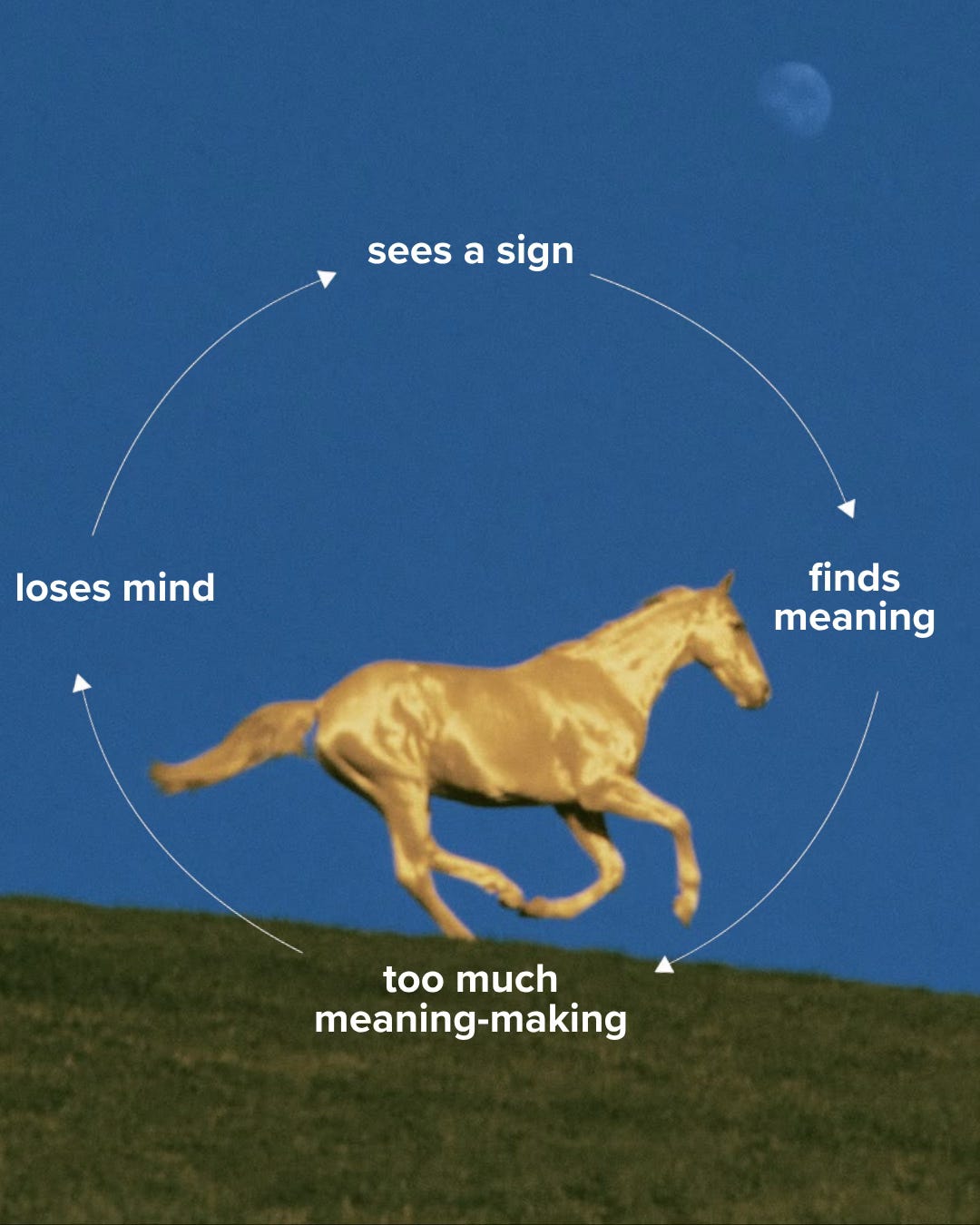
Meaning-making can lead you from one synchronicity to the next to the next to the next until you’re stranded out in the cosmos. When do you know the right time to stop with the meaning-making? Not every single thing you see and encounter can be a sign.
Magic is more or less real but magic without sanity and grounding is psychosis.
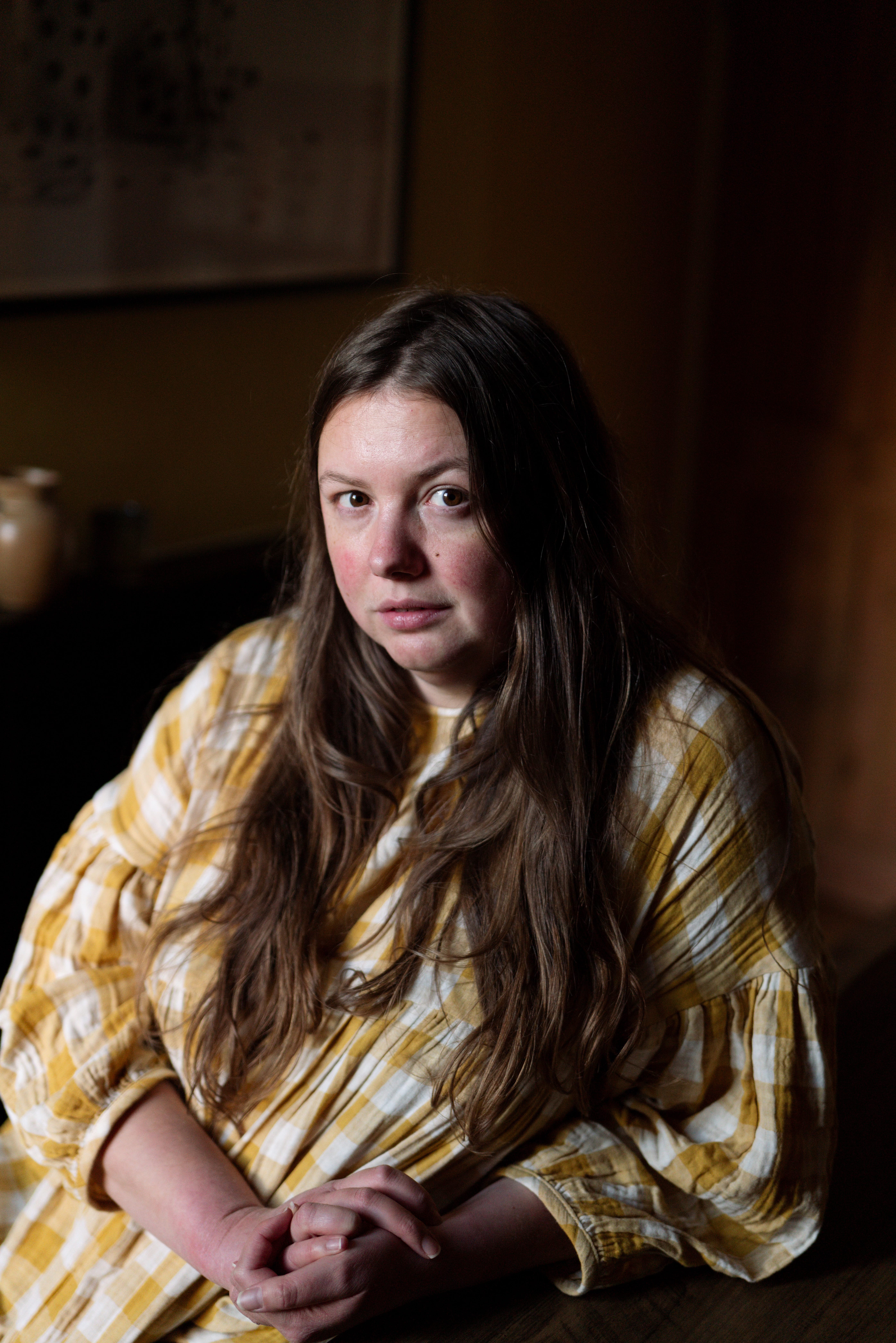
Pic of Hannah by Sophie Davidson
The language of the cult itself probably sounds hilarious to anyone who isn’t into spiritual culture. It gets more and more ridiculous as it goes on (a course in “unicorn magic”: lol) but it starts with Hannah being presented with the possibility that if she pays enough money she can eventually become a “ritual master”. That sounds sort of normal if you’ve so much as read a book about Aleister Crowley. What became clear to me is that there will be two camps of readers: those who understand exactly how she got sucked into this organisation, and those who will think she was simply too naive or whimsical to realise it was all make-believe.
When she’s in a restaurant with other cult followers, some of the students have beer or non-vegan food. She silently judges them as being “behind” her on “the path” and says they’d catch up eventually. Oh, this made me laugh.
It strikes me as important that this cult presents their raison d’etre as WE WILL SAVE THE WORLD WITH OUR MAGIC AND HEALING POWERS. Most of our jobs are Bullshit Jobs. Hannah is an actor. I am a writer-journalist who mostly submits to copywriting. We are both making things, sure, but in industries that reward sex and youth over talent and skill. Neither of us is saving the world. I fantasise about it sometimes. My positive actions adding up to something. Does everyone have a dormant desire in them to save the world??
When she talks in the past tense about the magic of synchronicities – bumping into someone, for instance, and thinking ‘of course we bumped into each other!!’ – it made me queasy that she can’t have that anymore.
Maybe too much meaning-making is hazardous but no meaning-making at all for the sake of one’s sanity is very sad indeed.It’s inevitable that Steve is at the centre of her hallucinations. She hears his voice in her head. Is magic the problem, or unavailable men?
Actually: soulmate theory is the real social ill and a belief system women still use to maintain our own oppression. It turns out Hannah’s cult is similar to the Twin Flames Universe cult (see: Netflix doc), which keeps people hooked by promising they have a single soulmate and that the cult can help find them. As a bisexual interested in open relationships, Hannah never actually believed in the idea of soulmates. But that sneaky, inherently culty idea managed to get into her head anyway!
If we didn’t have a material form and live in a material world, we’d go psychotic. The physicality is what keeps us sane in the video game.
Acting – as an activity, an art form – suddenly seems psychotic. What’s the difference between losing yourself in magic and losing yourself in a role? They’re both activities of the imagination happening in fantasy worlds.
This fucking Steve guy. The fact that he keeps messaging Hannah after she’s been sectioned: why. He’s scared she’ll sue them, go public, take actions that bring disrepute to his questionable YA-coded magic academy. Maybe he thinks he can bring her back on side to become one of his most dedicated followers. Or maybe his motivations are darker than I can fully grasp!
The relief she feels when she finally has an explanation for herself: bipolar disorder. I think that a lot of women, or neurodivergent / mentally ill / traumatised people get caught up in ungodly and godly activities in the search for what’s wrong with us when there’s obviously nothing Wrong.
If we lived in a better world in which we could just Be we wouldn’t be shown our limitations anywhere near so acutely. To fulfil the point of life, we need to see some limitations – to learn, to grow – but not any of the struggles and tribulations produced by capitalism. Those are just a joke without a punchline.I’ve never seen someone write about how addictive magic is. Besides Joss Whedon with Buffy the Vampire Slayer’s Dark Willow. Hannah writes about magic like there’s a 12 step group for Magic Addiction, which would indeed be a good one because you could openly talk about going and people would assume you’re nothing more than an adult student still figuring life out. And they would not be wrong (ha ha)!
I liked Hannah Murray throughout this memoir but when the trad wife content of her final magic classes is the thing that finally puts her off the organisation, boy, was I charmed. Believing in the existence of invisible dragons? Sign me up. The dress code involves wearing a skirt? This cult thing has gone too far!
The greatest line for me is: “Knowing something is a cult is not enough to stop you from wanting to be a part of it.” Hannah knows what she’s doing because we all do it everyday; we all create our affiliations, follow our teachers, attend our churches. When do we decide to draw the line? When it physically or mentally hurts us? Or when the idea of living in a world without our cult feels more painful than total psychic obliteration?
At the book’s close, she admits that she can’t meditate or do anything remotely woo woo. She’s allergic to the spiritual now. It’s a depressing conclusion that she teases throughout the memoir. You know it’s coming. Cutting off those possibilities was the only way for her to move forward.
I’m glad she found her ‘out’, but I wish there was a middle way through. Fake magic and dodgy spiritual teachers don’t just steal your practices; they colonise your capacity for wonder. For saying: shit, there’s more to all this. Hannah doesn’t just lose faith in woo (which would be totally fine) she loses access to an entire mode of relating to the world. Her natural condition is now synonymous with danger, and with madness.Seriously, fuck Steve.
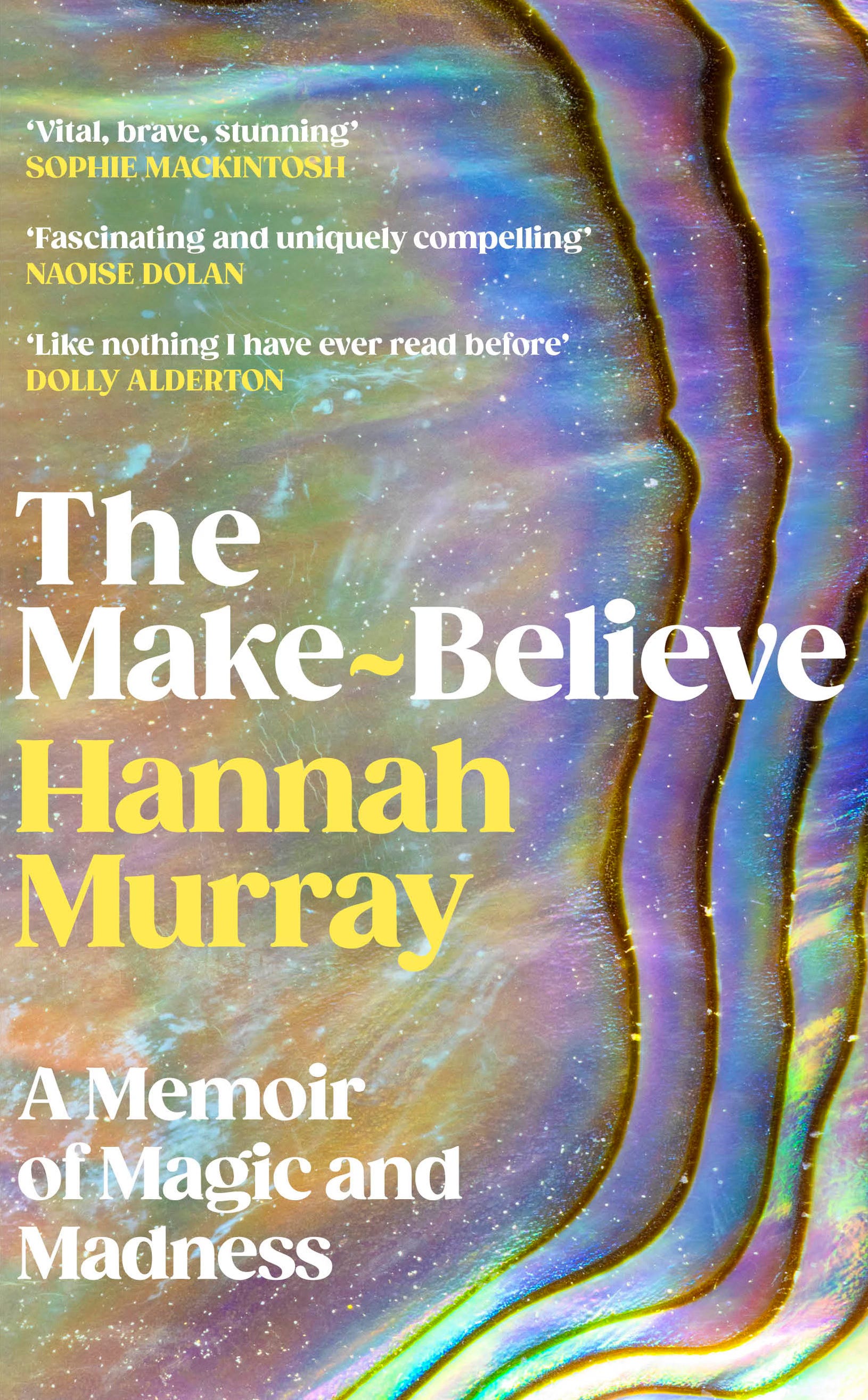
The Make-Believe: A Memoir of Magic and Madness by Hannah Murray is out now on Penguin Random House